



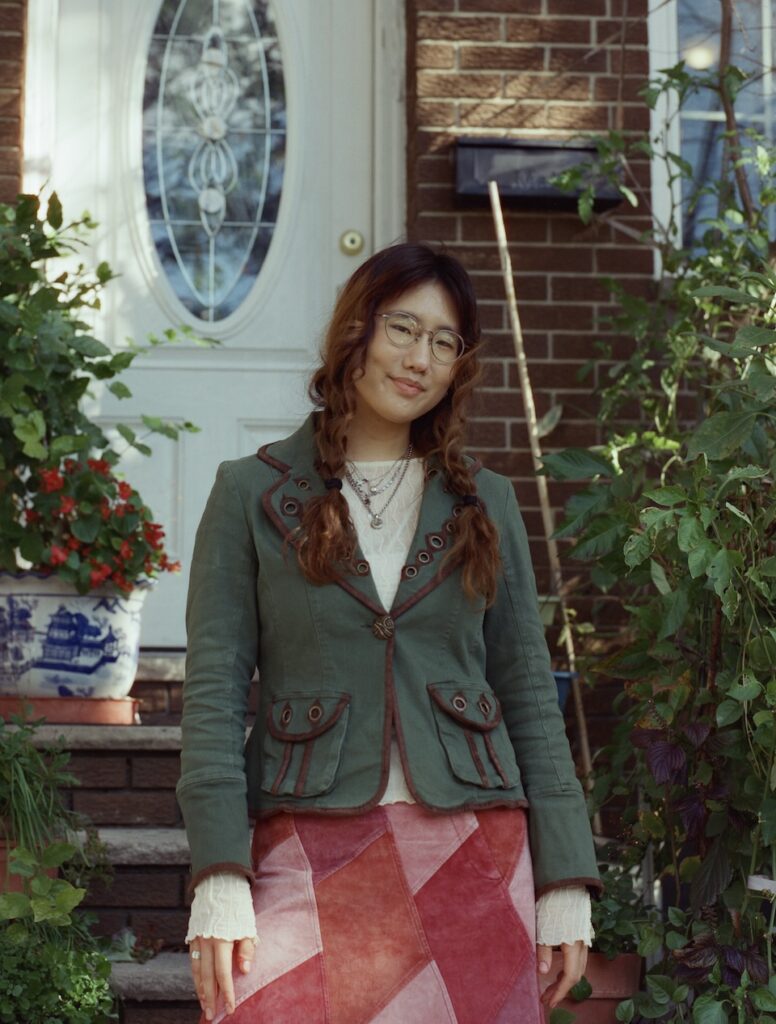
“I just want to center people and compassion.” Columbia student Chaaeun Yoo shares her drive to cultivate an empathetic world
 By: Anthony Payne
July 14, 2026
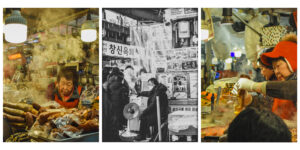
Chaeeun Yoo’s passion for people draws largely from her Southern upbringing, but she traces her beginnings as a storyteller to an eighth grade trip to South Korea. It was at a protest in a farming village in Seongju where she got her spark for storytelling. During her stay she learned of weekly rallies against US-military occupation practices that hinder farmers’ access to land. She felt herself provoked not just to join in, but to document the movement as well.
“That village specifically is infiltrated with this thing called “Terminal High Altitude Area Defense, Chaeeun explains. “It’s a military deployment by the US under the guise that they’re protecting South Korea from North Korean missiles, but it’s really hindering their sovereignty and access to land. Being there really sparked [my interest in] documentary storytelling and photography.”
Now a sophomore at Columbia University, Chaeeun plans to major in History and English. Moving to the city has not diminished her passion for resistance-based storytelling, and she continues her work as a documentarian when she can. “What draws me specifically to like photo documentation is just how unpolished it can be,” she says. “It’s not you embellishing things with your own words. It’s very raw, and how you capture the people that you know are either advocating for something, protesting something. Even though it’s very raw, it’s also quite beautiful.”
Chaeeun was recognized by Young Arts for capturing the protests in Seongju. Galvanized, she returned home to North Carolina and started Our Iyagi, a grassroots organization committed to socio-political organizing, resistance, and building community between underserved people. She joined the SRL community as a member of the Student Advisory Team, and attended the 2026 Summer Academy, where her group produced a story on Fred Tutman, the country’s only Black Riverkeeper.
While embodying a steely assuredness in her beliefs, Chaeeun speaks with an openness and warmth that reflects the well of human compassion that girds her ambitions. Her heart is as deep as her spine is strong.
 Growing up in the South colored Chaeeun’s perspective with empathy for the systematic underdog. Rather than leave the South behind as many are wont to do, she retains a deep connection with her home region. She’s drawn to people and work by authors like Toni Morrison and Kiese Laymon, who tell stories that feel authentic and salute the quiet, often overlooked beauty of the region and its people. Southern stories and storytellers get her in a way she acknowledges is a rarity in the Northeast.
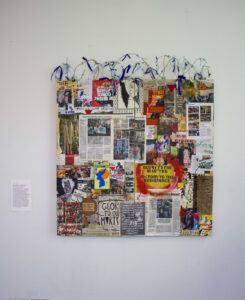 In the news, she wants to see more stories about the South’s rich history, particularly following people of color and the South’s rich history of people power movements. “Especially with the current administration, a lot of people are focusing on the nation at large – which, of course,” she explains. “But the people who are extremely harmed are in spaces that aren’t like New York or California. It’s people living in Louisiana, in North Carolina, in Tennessee. I would love to see more coverage on that.”
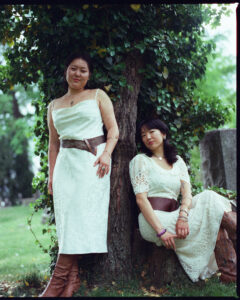 Chaeeun does not stray away from the political, and entreats those who feel disillusioned by politics and the news not to check out. “I think people think of politics as a dirty word,” she says. “Even when they’re talking about human rights, people say, ‘Oh, it’s not a political issue. It’s human rights.’ But I kind of disagree. I think human rights are a part of politics. And that isn’t a bad thing.” She feels it’s important not to tune out bad news dissenting opinions, because engaging is essential. She is a fan of progressive, independent creators who encourage political engagement.
Though the journalism industry remains in a shifting position, Chaeeun regards the influx of independent journalism as a hopeful, democratic new wave. “I know people have a really weird mixed feeling about getting your news solely from social media, which I agree with,” she says. “But I think there’s also beauty in that anyone and everyone can feel empowered to share their voice, even if they don’t have the most sleek resume or accolades that affirm their credibility. As long as you approach it with care and empathy, then I think anyone should feel empowered to share their voice.”
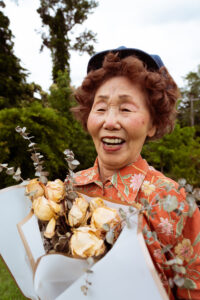
Chaeeun loves people watching, and moving to lively New York reignited her passion for photography: on weekends, she takes her film camera out and asks strangers if she can take their picture. On campus, she volunteers with the Housing Equity Project to distribute essentials to unhoused people from 116th to 90th Street. This summer, she’s back in North Carolina to intern at a Freedom School, which exists to help kids retain their literacy skills over the summer. 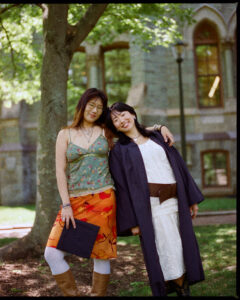
“I had to look up on Safari, ‘what do kindergarteners look like?’ Because I haven’t interacted with them in so long,” she laughs. “I forgot how small they are! But I’m really excited to work with them because they’re very adorable and lovely and precious.”
Chaeeun is refreshingly action-driven. Her advice for high school students is to go the way your blood beats: “Try not to get so caught up in like the LinkedIn warrior trap – which I know is very easy, I’m also in it. I think just prioritize what makes you feel good and follow your instincts.” It’s fair to assume that most Ivy League scholars were once college-minded high schoolers. Chaaeun shares that that wasn’t the case for her. “When I look back, I feel like compared to my peers, I was kind of locked out,” she reflects. “I didn’t really care that much about my resume or extracurriculars as much as [you’d] expect people from my school to be.”
As a humanities major, she grapples with balancing her passion against her wallet. Entering her second year at Columbia, she is wary of the pull of the finance and consulting worlds, but is not naive, and earnestly supports her peers that pursue that route. “I don’t want to fall into that trap,” she says. “I just want – whether this is in my actual profession or not – to center people and compassion. That again doesn’t have to be my formal occupation, but no matter what, I know that I don’t want a career to deter me from what I come from and honoring my roots.”